
Keeping Your Dog Safe in the Las Vegas Heat
Hot pavement, heatstroke signs, smart walk times, and cool indoor play: a practical guide to keeping your dog safe through a Las Vegas summer.
• Health & Safety
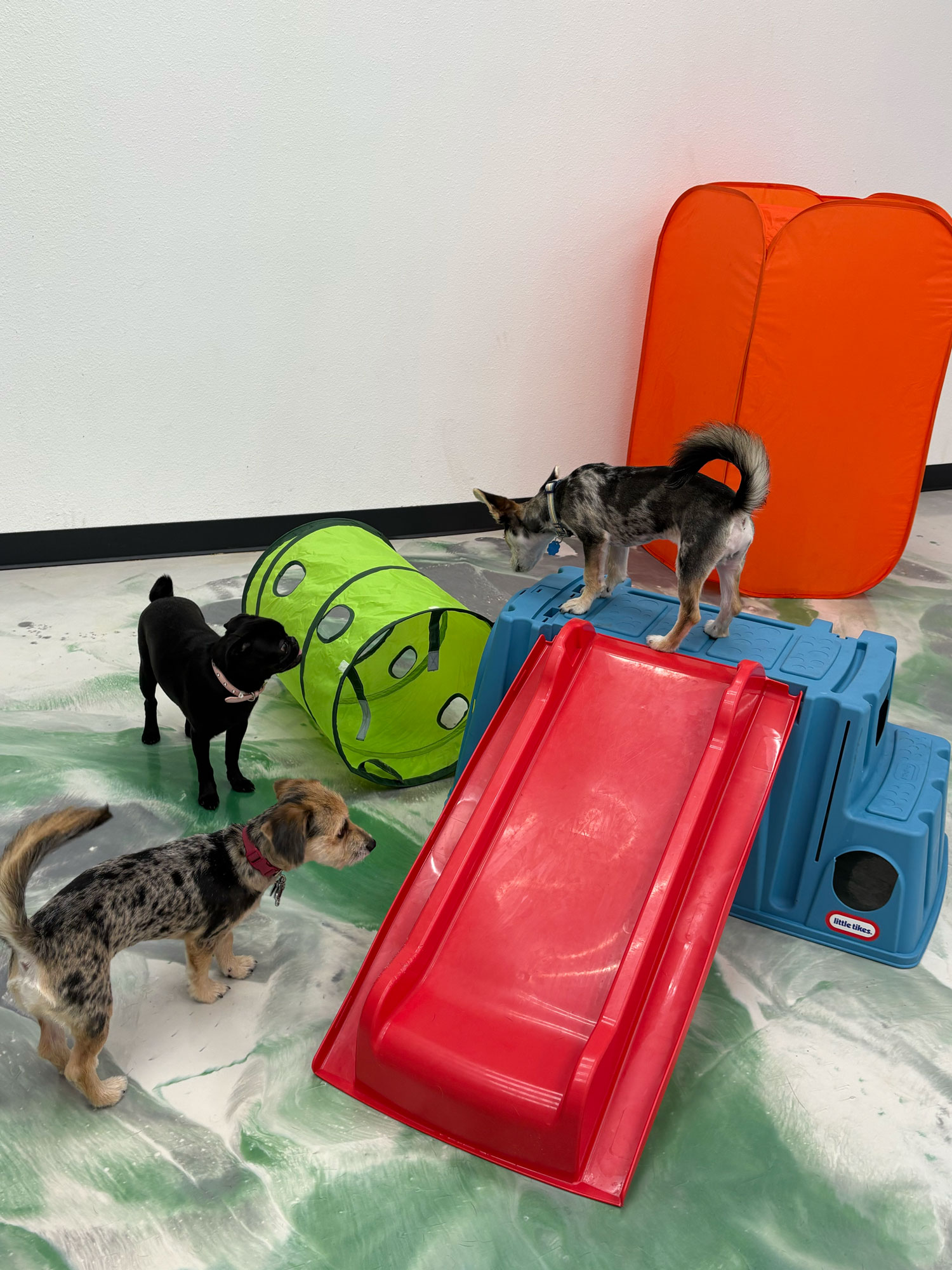
Las Vegas summers are no joke for dogs. Long stretches of triple-digit days, nights that barely cool off, and sidewalks that soak up sun for hours all add up. Dogs cool themselves mostly by panting, which works far less well than sweating, so they can overheat faster than we expect.
The good news: a few simple habits keep most dogs safe and comfortable all season. Here’s what we tell the families we see every day.
1) Check the pavement before every walk
Asphalt and concrete get much hotter than the air around them, and in Las Vegas they stay hot long after sunset. Paw pads can burn quickly, and a dog won’t always tell you until the damage is done.
- Use the hand test: Press the back of your hand flat on the ground for about seven seconds. If you can’t comfortably hold it there, it’s too hot for paws.
- Choose surfaces wisely: Grass, shaded paths, and dirt trails run cooler than blacktop. Artificial turf and rocks can get very hot, too.
- Watch for paw trouble: Limping, licking the feet, or pads that look red, blistered, or darker than usual all deserve a call to your vet.
Good to Know
A pleasant evening breeze doesn’t mean the ground has cooled. On a summer night in Las Vegas, pavement can stay too hot for paws well after dark. Test the ground, not the air.
2) Time walks around the heat, and keep water close
In the hottest months, the safest window is early: around sunrise, before the sun has had a chance to bake the ground. Late evening can work too, as long as the pavement passes the hand test.
- Shorten midday outings: A quick potty break on grass or in shade is plenty when it’s hot out.
- Slow the pace: Skip the jogging and ball chasing on hot days. Sniffing walks are great exercise for the brain without the overheating.
- Bring water every time: A collapsible bowl and a bottle take up almost no room. Offer small drinks often instead of one big gulp at the end.
- Keep fresh water at home: Refill bowls through the day and keep them out of direct sun. Some dogs drink more when there’s more than one bowl around the house.
3) Know the signs of heatstroke, and act fast
Heatstroke is a true emergency. It can happen on a walk, in a backyard, or in a car, and it can turn serious within minutes. Learn the warning signs now so you’re not guessing later.
- Heavy, frantic panting that doesn’t settle with rest
- Thick drool or a lot of drooling
- Gums or tongue that look bright red, or unusually pale
- Weakness, stumbling, or seeming confused
- Vomiting or diarrhea
- Collapse or unresponsiveness
If you see these signs, move your dog into shade or air conditioning right away and start cooling them with cool (not ice-cold) water, especially on the belly, armpits, and paws. A fan helps. Offer small amounts of water if they want it, but don’t force it.
Then call your vet or the nearest emergency vet immediately and head in, even if your dog seems to be improving. Heatstroke can cause problems inside the body that aren’t visible at first, and your vet is the right person to check.
4) Never leave a dog in a parked car
This one deserves its own section. Even with the windows cracked, a car in the Las Vegas sun heats up fast, and it can become dangerous in just a few minutes. Running errands with your dog sounds fun, but if they can’t come inside with you, they’re safer at home.
The same goes for parked trucks, garages without cooling, and backyards without real shade. If it’s too hot for you to sit there comfortably, it’s too hot for your dog.
5) Take extra care with flat-faced and higher-risk dogs
Some dogs have a much harder time with heat. Brachycephalic (flat-faced) breeds like Pugs, Bulldogs, French Bulldogs, Boston Terriers, Boxers, and Shih Tzus have shorter airways, so panting doesn’t cool them as well.
- Seniors and puppies: They regulate body temperature less efficiently.
- Heavy or double coats: Huskies, Samoyeds, and similar breeds need shade and cool rest. Ask your groomer or vet before shaving a double coat, since the coat can help protect against sun.
- Dogs carrying extra weight or with heart or breathing conditions: Talk to your vet about safe activity levels in summer.
- Very dark coats absorb more sun and warm up faster outdoors.
For these dogs, keep outdoor time short, stick to the coolest parts of the day, and lean on indoor exercise.
6) Use indoor, climate-controlled play on the hottest days
Dogs still need to burn energy in July. When it’s too hot for long walks, indoor play keeps them active without the risk. At home, try short training sessions, puzzle feeders, hide-and-seek with treats, or a game of tug in the hallway.
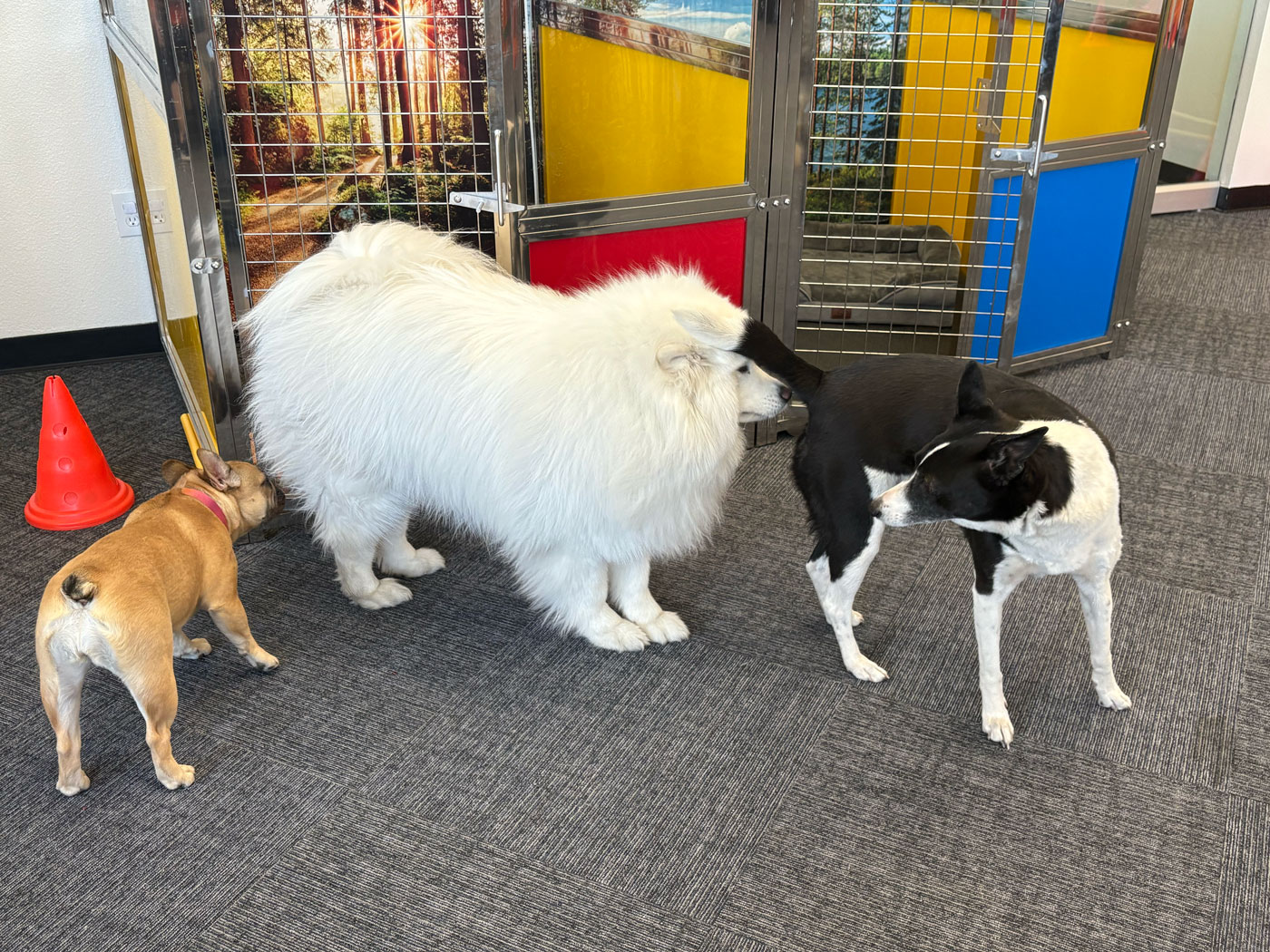
Our dog daycare is another option. Play happens indoors in a climate-controlled space with supervised playgroups and rest breaks built in. We’re open 7am to 7pm every day. A half day is $20, and a full day is $30 for up to 8 hours (time beyond 8 hours has an additional charge). If your schedule is tight, our Pet Valet can handle the drive so your dog doesn’t wait in a hot car.
Have questions about summer care or what to expect on a first visit? Check our FAQ, read about dog daycare in Las Vegas, or contact us. We’re happy to help your dog stay cool and happy all season.
Next: Which Vaccines Does Your Dog Need for Daycare and Boarding?