Reading Your Dog’s Body Language During Play
Learn to read play bows, loose bodies, stiffness, and stress signals so you know when dog play is healthy and when to step in. Tips from Las Vegas daycare.
• Training
Dog play can look wild from the outside: growling, chasing, wrestling, open mouths everywhere. Most of the time, it’s perfectly healthy. Sometimes it isn’t. Knowing the difference helps you step in at the right moment, and relax when everything is fine.
1) What healthy play looks like
Good play is loose, bouncy, and a little silly. Dogs use exaggerated movements to say “this is a game, not a fight.” Look for these signals:
- The play bow: Front end down, rear end up. It’s an invitation, and it often shows up again mid-game to reset the mood.
- A loose, wiggly body: Curvy spine, relaxed shoulders, soft face, and an easy, sweeping tail.
- Bouncy, inefficient movement: Playful dogs take the long way around. They hop, spin, and flop instead of moving in straight, efficient lines.
- Role reversal: The chaser becomes the chased. The dog on top lets the other dog win. Turns get shared.
- Self-handicapping: A big dog lies down to wrestle a small one, or softens their bite.
- Natural pauses: Both dogs stop, shake off, sniff the ground, then jump back in.
Play noises are normal too. A lot of happy dogs growl and grumble while they wrestle. The sound matters less than the body around it.
2) Warning signs that play is turning
Trouble usually builds in small steps before anything big happens. These are the signals worth watching:
- Stiffness: A body that suddenly freezes or goes rigid, even for a split second.
- A hard stare: Fixed, unblinking eye contact, often with a closed mouth.
- Raised hackles, in context: Hair standing up along the back can just mean excitement. Paired with stiffness or a hard stare, it means pay attention.
- Tucked tail and low posture: One dog is scared, not playing.
- Stress signals: Lip licking, yawning, turning the head away, or shaking off over and over can mean a dog is uncomfortable and asking for space.
- One-sided games: The same dog is always chasing or always pinned, and the other keeps trying to escape.
- Escalating intensity: Faster, louder, harder, with fewer pauses.
Good to Know
Try the consent test. Gently separate the dogs for a moment. If the dog who was underneath goes right back for more, the game is mutual. If they leave, hide, or shake off and walk away, they were done, and it’s time for a break.
3) When and how to interrupt
You don’t have to wait for a scuffle to step in. Short, early interruptions keep play from boiling over.
- Interrupt when: play stops pausing, one dog keeps trying to leave, or you see stiffness or a hard stare.
- Use your voice first: Call your dog in a cheerful tone and reward them for coming over.
- Add distance: Walk the dogs apart or put a barrier between them for a minute or two.
- Let everyone cool down: A drink of water and a sniff around usually resets the mood.
- Stay calm: Yelling adds energy. Calm, quick movement works better.
Never reach between two dogs who are truly fighting. Hands get bitten that way. If a real fight happens or a dog is hurt, separate them safely and call your vet if you see any injury.
4) How trained staff manage playgroups
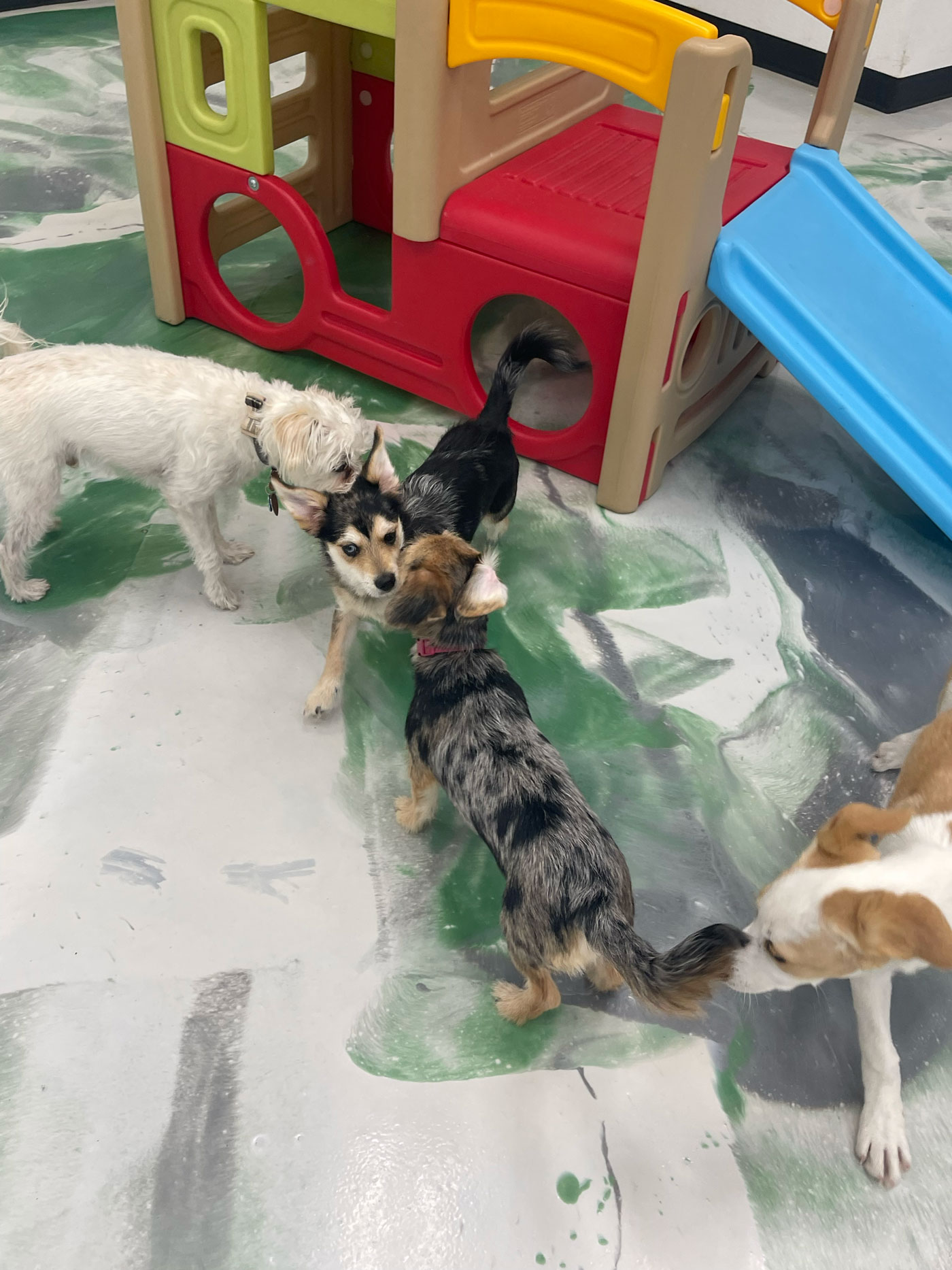
In a daycare playroom, reading body language is the whole job. Our team watches the room constantly and steps in long before small tension becomes a real problem.
- Matching dogs thoughtfully: Size, energy level, and play style all factor in. A gentle senior and a rowdy adolescent may not belong in the same game.
- Built-in rest breaks: Dogs get regular downtime so excitement doesn’t pile up through the day.
- Early redirection: Staff call dogs away, start a new activity, or split up a pair that’s getting too intense.
- Knowing each dog: Regulars have their own styles. Staff learn who likes to wrestle, who prefers to chase, and who needs a quieter corner.
That kind of structure is what separates supervised daycare from a free-for-all. Dogs get the social time they enjoy, with people watching who know what healthy play looks like.
5) Practicing at home
You can sharpen your eye with everyday observation. Next time your dog plays, watch for a few minutes without stepping in.
- Count the pauses. Healthy play usually has lots of them.
- Notice who chases whom, and whether it switches.
- Practice calling your dog out of play, rewarding them, and sending them back. This builds a reliable “break” cue.
- Record a short video and watch it in slow motion. Small signals are much easier to spot.
Learn more about our Las Vegas dog daycare, our dog training programs for dogs who get too rough or too nervous in play, or check our FAQ for daycare requirements. When you know what to look for, playtime gets a lot more fun to watch.
Next: How Often Should You Groom Your Dog? A Coat-by-Coat Guide